Key Takeaways
- Microsoft 365 Copilot is the natural default for work inside Microsoft apps. Gartner’s 2026 Copilot research calls it “the enterprise assistant of choice for many” but adds that “wide-scale adoption and value realisation is not guaranteed.”
- The deciding factor is where your company knowledge lives. In Salesforce research, data and analytics leaders estimated that 19% of their company’s data is siloed or inaccessible, and 70% believe their most valuable insights sit in that 19%.
- Many organisations will run both. VaultiScan is deployed via Microsoft Azure, so it does not replace a Copilot rollout, but can be used as a cited knowledge and data layer instead.
Microsoft 365 Copilot is more useful for supporting users within the Outlook, Word, Teams and SharePoint environments. VaultiScan is more suitable for locating verified answers in many documents, databases and business systems and it includes a reference back to the source on each answer. This is the simple answer for anyone considering using a Microsoft Copilot alternative for enterprise knowledge search. The longer answer relies on the location of your knowledge, and if people need help writing or verifying facts.
For many organisations, the result is a clear division of labour, with VaultiScan running as the knowledge layer beside Copilot.
What Microsoft 365 Copilot Does Well for Company Knowledge
The best thing about Copilot is its location. It is built into the apps that staff already use, and uses the email, files, meetings, and chats that are available to each person, and has respect for the permissions those interactions already have. That is tough to beat when it comes to knowledge that lives in Microsoft 365. Its Researcher agent goes further, working through multi-step questions across work content and the web and returning what Microsoft describes as “comprehensive, source-cited reports.”
Copilot also reaches beyond Microsoft 365. Microsoft offers over 100 prebuilt Copilot connectors for services such as Salesforce, ServiceNow, SAP, and SQL and Oracle databases. Synced connectors index external content into Microsoft Graph, while federated connectors use the Model Context Protocol (MCP) to fetch content in real time without indexing it.
The product is also changing quickly. In September 2026, Microsoft split Copilot licensing in two: a per-user licence covers everyday AI such as summarising meetings and drafting documents, while advanced agentic work and frontier models are billed through Copilot Credits. Gartner’s first take on the overhaul says Microsoft is “positioning Copilot as a primary work interface while introducing new user experience and cost management questions.”
When a Microsoft Copilot Alternative Makes Sense
Most Copilot vs enterprise search decisions come down to three gaps.
1. The first gap appears with structured data.
The query such as “show Q4 revenue by region” requires a database, rather than a document summary. Microsoft’s path is Fabric data agents, which can be used to show answers within Copilot, but require a paid Fabric capacity (F2 or higher) and are dependent on Fabric sources like lakehouses, warehouses and Power BI semantic models. What’s more, according to Microsoft’s documentation, they don’t support unstructured files like .pdf or .docx. This can turn into a data platform project before the first question is answered for teams that have data in existing databases not in Fabric.
2. The second gap is knowledge spread across systems.
Salesforce’s State of Data and Analytics survey of 3,800 analytics and IT leaders found they estimate almost a fifth of company data is siloed, inaccessible, or otherwise unusable. Connectors narrow that gap, but each one is another source to configure, secure, and govern.
3. The third gap is traceability.
In a regulated team an answer is not sufficient, reviewers must leave the correct passage or record behind the answer. 89% of Salesforce’s data and analytics leaders with AI in production have encountered inaccurate or misleading AI outputs. That’s why cited AI answers, which are linked to a specific part of a specific document, are now a shopping criteria in themselves.
How VaultiScan Approaches Company Knowledge Search
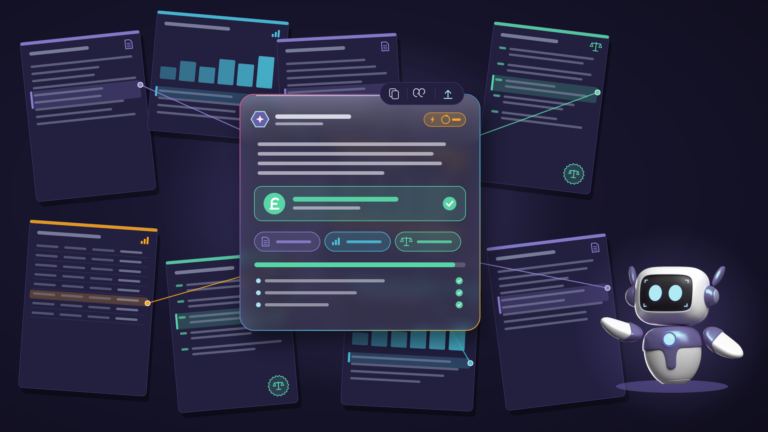
VaultiScan is designed as a standalone knowledge and data layer, not as a part of a single suite. Vaulti GPT deals with documents, such as PDFs, spreadsheets, presentations, contracts, and scanned files. All claims in an answer are connected to their source, and one may click a citation and immediately be taken to a passage in the original document. That makes it enterprise search AI built to be checked, not just read.
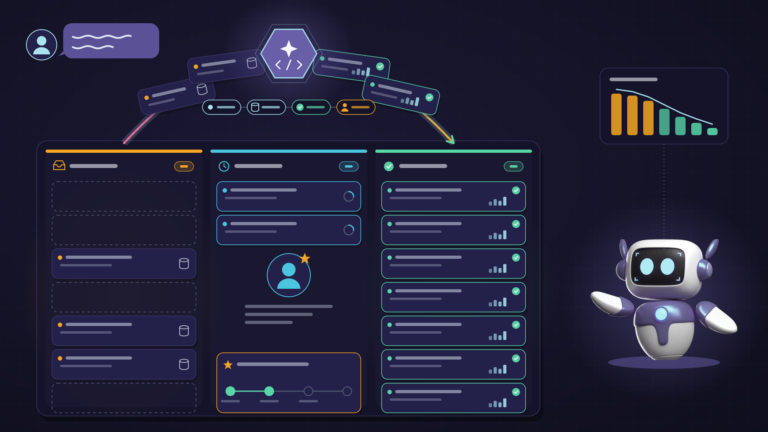
Vaulti Lake covers the structured side. It connects to existing databases and business systems with no migration or duplication. The user types a question in plain English, the agent pipeline interprets the business terms, generates and executes the SQL and returns the response along with a chart, and a chart of the SQL. In most cases, the next dashboard is replaced by a conversation, to answer these questions that teams construct when building Power BI dashboards.
Vaulti GPT and Vaulti Lake share one governance model. VaultiScan uses Microsoft Azure technology with a dedicated set of resources per customer, stores data within the customer’s own Azure environment and never trains external models. It includes SOC 2 Type II, ISO 27001, and GDPR compliance, has role-based access and audit logging, and Vaulti SDK includes the same cited retrieval within internal apps.
| Comparison Point |
Microsoft 365 Copilot |
VaultiScan |
| Primary purpose |
AI assistant for everyday work inside Microsoft 365 apps |
Cited knowledge and data layer across documents, databases, and business systems |
| Document sources |
Microsoft 365 content, plus 100+ prebuilt Copilot connectors |
Connected document sources, including PDFs, spreadsheets, contracts, and scanned files |
| Structured data |
Fabric data agents over Fabric sources, on a paid Fabric capacity |
Vaulti Lake queries existing databases in plain English, with no migration |
| Citations |
Source-cited reports through the Researcher agent |
Every claim linked to the exact passage in the source document |
| Deployment |
Microsoft’s cloud service, within the Microsoft 365 tenant |
Dedicated Azure resources for each customer, inside the customer’s own environment |
| Licensing |
Per-user licence, with advanced AI billed through Copilot Credits |
A separate platform, scoped to the systems and teams connected |
Related reading: Top Glean Alternatives for Enterprise AI Search in 2026
Frequently Asked Questions
1. Can VaultiScan and Microsoft 365 Copilot run together?
Yes. Copilot can be used for drafting and summarising in Microsoft apps and for general use in work, while VaultiScan can be used as the cited knowledge and data layer for those teams that require verified answers from documents and databases. They both run in the Microsoft cloud, thus are well integrated in the same estate.
2. Does Microsoft 365 Copilot search data outside Microsoft 365?
Yes, via over 100 prebuilt Copilot connectors. They all must be configured and managed, and questions asked about structured data usually go through Fabric data agents in the form of simpler plain-English questions.
3. Is VaultiScan built on Microsoft technology?
Yes. VaultiScan is AI built on Azure, with dedicated resources for each customer and data kept inside the customer’s own Azure environment.
4. How do I choose between Microsoft 365 Copilot and VaultiScan?
Ask where your teams are getting the knowledge from, whether it is mostly from writing or helping to verify answers, and whether they need answers that are easy to understand from structured data. Answers that point to writing and Microsoft 365 content favour Copilot. Answers that point to cross-system knowledge, data, and traceable answers favour VaultiScan, often alongside Copilot.
Search Where Your Company Knowledge Lives
Microsoft 365 Copilot and VaultiScan are designed to solve different queries. Copilot poses the question of how much faster can people work within the tools they’re already using. VaultiScan poses the question of if all information, whether it be a policy clause or a revenue number, can be tracked back to its source. Both questions are important and few organisations can afford to ignore either of them.
The best alternative to the copilot in business is usually not a substitute. It’s enterprise AI search that accesses the documents and databases that are not part of regular productivity tasks and displays the source behind the answers it provides.
Talk to VaultiScan about searching your own company knowledge with cited answers.