Key Takeaways
- Speed decides who wins the lead. Firms responding within one hour were almost seven times more likely to qualify a lead than firms that waited an hour longer.
- AI has made 24/7 service a consumer expectation, with 74% saying it’s now a standard feature.
- The revenue gap is measurable. The monthly number is calculated by multiplying delayed enquiries by lost conversion by the average deal value, which can then be compared to the cost of the chatbot.
- Speed alone is not the return. A fast answer pays back only when it is accurate and ends as a usable lead. VaultiScan grounds reply in the business’s own content and structures qualified chats into leads.
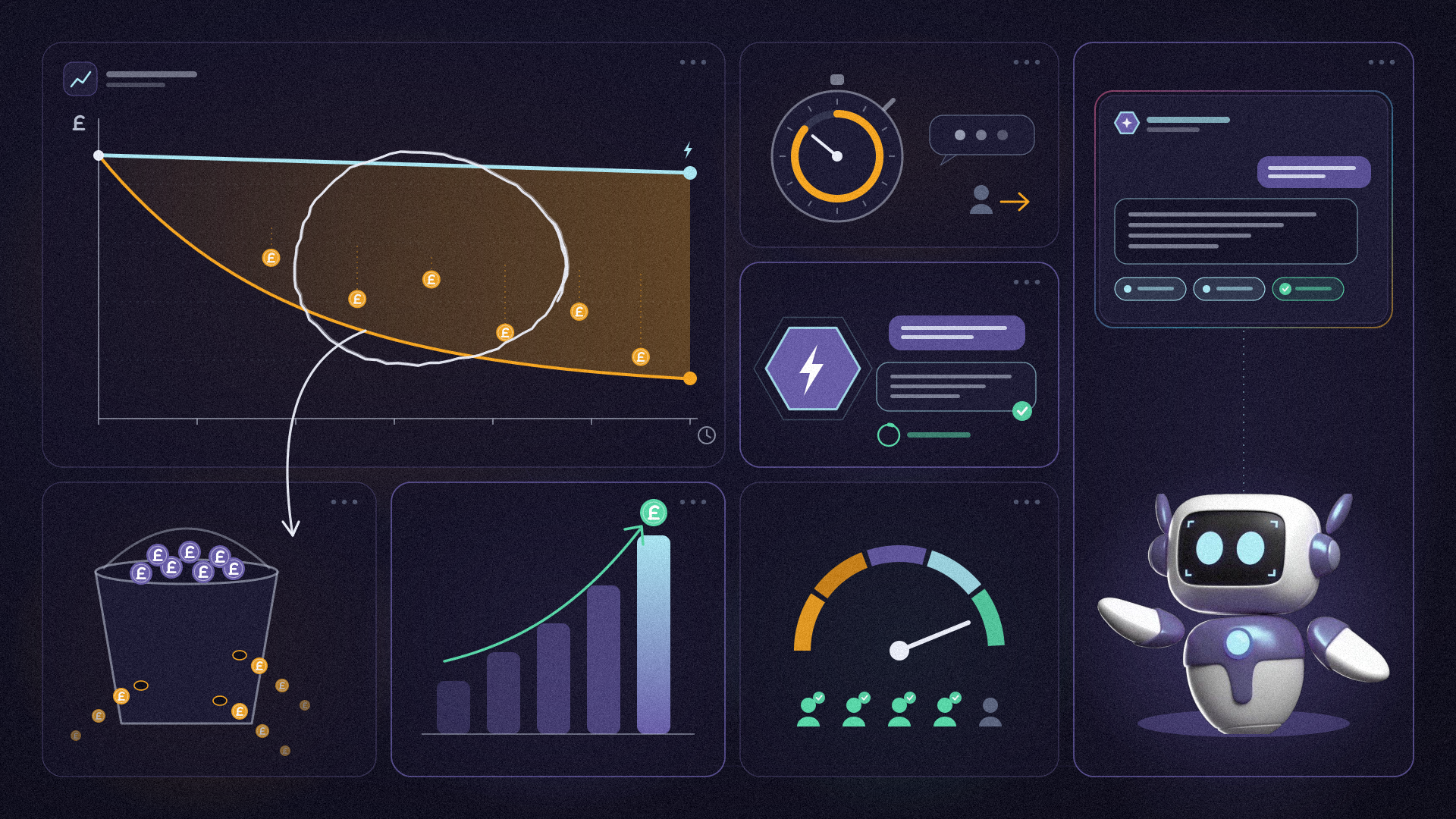
The value of a website enquiry is lost quickly if there is no action taken within an hour. The benchmark that most “speed to lead” statistics refer back to comes from a study by Harvard Business Review of 2,241 companies in the United States: companies that responded within an hour were nearly seven times as likely to qualify the lead as companies that responded an hour later. The companies that responded within 30 days had an average response time of 42 hours and 23% did not respond at all.
The study dates from 2011, and more recent survey data points the same way. It also covers the rationale behind the changing business case for AI for customer service. Most cases start with cost per ticket, but the larger number sits on the revenue side: prospects who asked a question on the website, heard nothing back, and bought elsewhere. An AI website chatbot that answers accurately in seconds, at any hour, recovers that revenue. The one that responds promptly but incorrectly, only loses it quicker.
Why Response Time Is a Revenue Metric
Buyers are increasingly doing more of their evaluation on their own and they expect the website to follow suit. 67% of B2B buyers prefer a rep-free experience, and 45% had used AI in their last purchase, based on the survey Gartner conducted with 646 B2B buyers in March 2026. If a buyer doesn’t want to speak to a rep, the website’s answer is usually the only type of sales conversation that occurs.
Consumer expectations go hand-in-hand. According to the consumer and business data gathered by Zendesk from over 11,000 participants in 22 countries across the globe, the report Zendesk’s CX Trends 2026 reveals that:
- 86% of consumers believe that responsiveness and the accuracy of the solution are strong factors in their purchasing decision.
- 74% of customers now expect 24/7 service due to AI capabilities.
- 85% of CX leaders say customers will drop brands that cannot resolve issues on first contact.
Speed and accuracy are one requirement, not two. An answer at 2am matters only if it is right the first time.
How to Calculate the Revenue You’re Losing to Slow Responses
The response-time revenue gap is the loss of revenue that a business experiences because of delayed replies to enquires that buyers will not endure. It can be estimated from three numbers most sales teams have:
Monthly revenue gap = delayed enquiries × (prompt conversion rate − delayed conversion rate) × average deal value
- Delayed enquiries: Chat, form, and email enquiries per month that got no useful reply within an hour, including those that arrived out of hours.
- Prompt and delayed conversion rates: Your own lead-to-customer rates for enquiries answered within the hour versus later.. If your CRM doesn’t report this way, you need to create this report first.
- Average deal value: First-year contract or order value rather than lifetime value, to keep the estimate conservative.
Measuring AI Chatbot ROI: The Metrics That Matter
Payback does not have to be a long wait. 70% of all companies in Salesforce’s 2026 survey of 3,075 customer service employees said they had measurable value in the first 60 days of introducing AI agents and adoption of agentic AI in service jumped from 39% in 2025 to 66% in 2026. Once you’ve launched a chatbot, these 4 metrics will let you know if it’s earning back lost revenue:
| Metric |
What It Measures |
How to Track It |
Why It Matters to ROI |
| Time to first response |
Seconds from a visitor’s question to a useful answer |
Chat logs, split into business hours and out of hours |
Shrinks the “delayed enquiries” input in the formula |
| Qualified lead rate |
Share of chats that end with identity and clear buying intent |
Leads created ÷ total chats |
Shows whether speed is turning into pipeline |
| Chat-sourced conversion rate |
Share of chat-sourced leads that become customers |
CRM, with leads tagged by source |
Tests whether chat leads close like promptly handled ones |
| Answer accuracy rate |
Share of answers that are correct and sourced |
Sampled review of transcripts against source content |
A fast wrong answer widens the gap instead of closing it |
Three Objections to Chatbot ROI, Answered
- “A fast wrong answer is worse than a slow right one.”
It is and it’s the most frequent reason a chatbot doesn’t pay off. Vaultiscan’s AI assistant, Vaulti GPT, answers questions about the business contained in the documents they link, and each response is linked to the original document. If someone asks you about the price range or compliance you will receive a definite answer, not a guess. If you are wondering why ungrounded conversational systems don’t work in the enterprise, read Why Conversational RAG Systems Fail in the Enterprise.
- “Our buyers are not looking to deal with a bot; they’re looking for a human.”
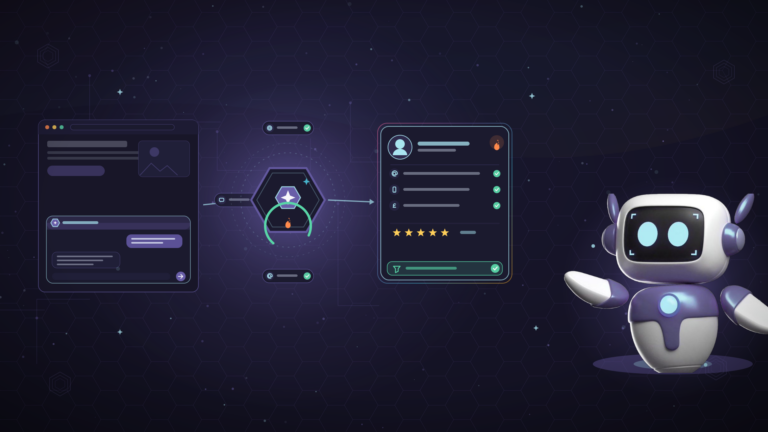
Many do so, at the right moment. An AI customer support agent answers the initial questions right away and transfers the conversation to another agent. However, Zendesk found that only 81% of consumers want to be able to end the chat without having to backtrack, which is only possible when the chat can be seen as a consumable record. Vaulti SDK integrates into the company’s existing app, including its own web site, and organises quality conversations into leads (identity, intent, and the questions raised) that fit the CRM workflow that the sales team is already using.
- “We can’t justify the cost.”
So, begin with the gap in the revenue and not the licence fee. If there is an amount over the cost of the platform, the case is presented before support savings are calculated. Those are real but secondary savings – Gartner projects that by 2029, 80% of simple customer service problems will be solved by agentic AI without the need for human intervention, reducing the cost of operation by 30%.
Related reading: AI Knowledge Management Software: Benefits & Use Cases.
Frequently Asked Questions
- What is the ROI of an AI website chatbot?
This is the revenue saved due to the enquiry that may have been lost for a long time and the support cost saved, over the total cost. The best comparison is, to compare the conversion rate for leads that waited for over an hour to the conversion rate for chat leads.
- How quickly should a business respond to a website enquiry?
Within an hour at most, based on the Harvard Business Review research above. An AI chatbot answers in seconds, including out of hours, which is where 24/7 AI customer support earns its place.
- How do I calculate revenue lost to slow response times?
Multiply your monthly delayed enquiries with the difference between your prompt and delayed conversion rate and then multiply that by your average deal value.
- Is a website chatbot the same as conversational AI for support?
They overlap. When talking about conversational AI for support, it mostly goes about settling cases or issues that current customers have. A website chatbot also serves prospects before they buy, which is where most of the revenue impact sits.
- How much does an AI website chatbot cost?
There is no fixed answer to this question as it depends on the licence model, how many content sources are linked and how much effort is put in. Work out the total expenses (licence, set up and content maintenance) vs. monthly loss of revenue.
Every Minute Has a Price
Most chatbot business cases count tickets deflected. The bigger number is the revenue that walks away while an enquiry waits. Buyers reward speed, prefer to self-serve, and expect answers at any hour. But speed without accuracy loses leads faster, and a fast answer that never reaches sales is a transcript, not pipeline. First, assess the size of the gap, then select a Chatbot that will fill that gap with grounded answers and structured leads. The best way to measure AI ROI for business isn’t the bot’s price tag, it’s the price of its inaction.