Most conversational RAG systems pass the demo but fail in production. They handle simple, single-question queries well, but performance deteriorates when a user poses a multi-step reasoning question, a follow-up that relies on a prior answer, or a comparison across documents. That is the uncomfortable conclusion of Coveo’s June 2026 analysis, “Most Conversational RAG Systems Work — Until They Don’t”, and it matches what CIOs who deployed retrieval-augmented generation (RAG) pilots in 2025 are now discovering: the gap between demo-ready RAG and production-grade RAG is where most failures occur. The language model is often not the root cause of enterprise RAG system failures. It’s the layers surrounding it: query handling, chunking, metadata, and the underlying data quality.
The Failure Is Predictable, and It Follows a Pattern
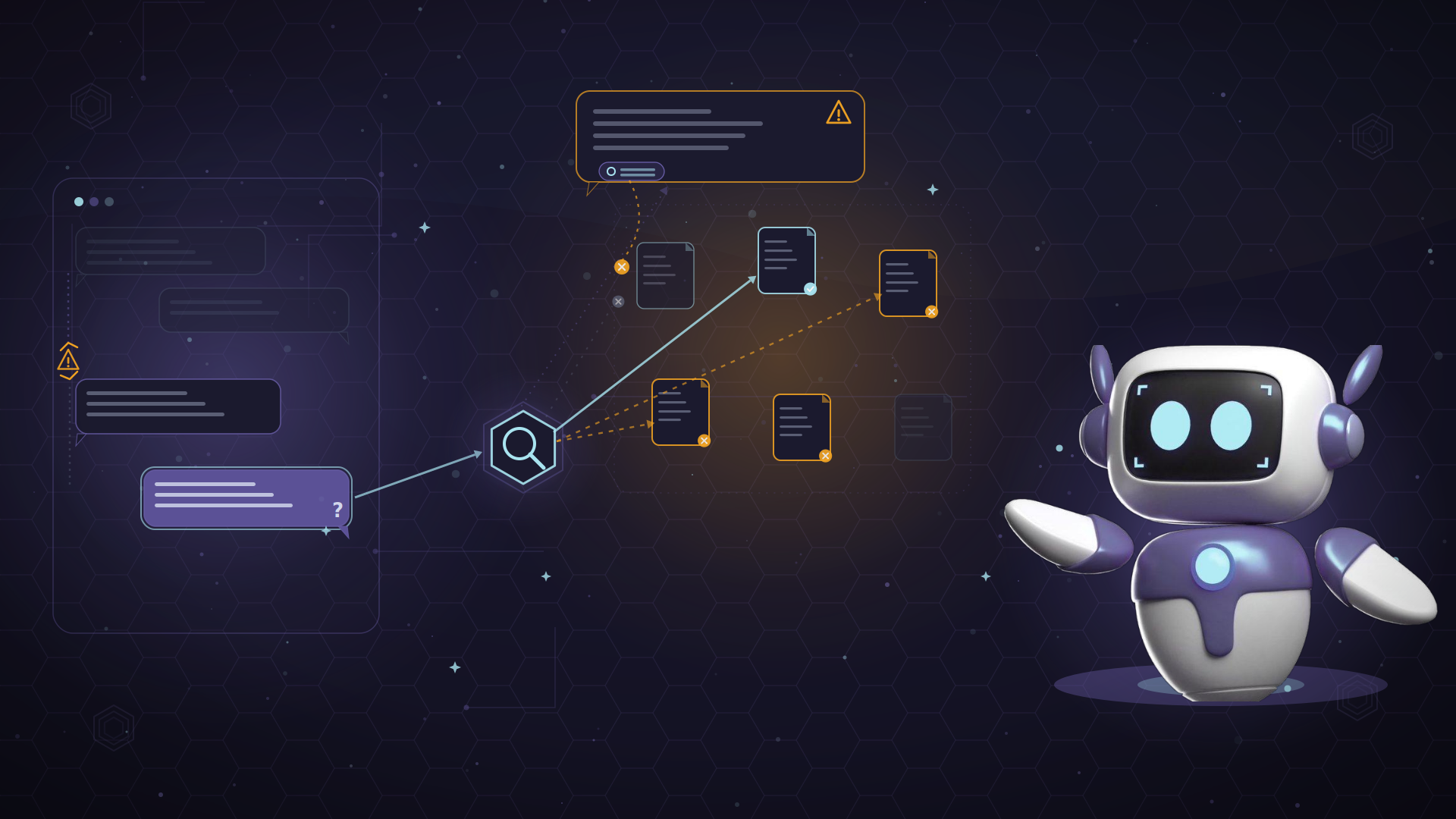
The problem, according to Coveo’s researchers, is not retrieval, but structure of the query. ‘Who owns this contract?’ represents a single intent: one retrieval step, one answer. Enterprise users don’t stop there. They will ask: ‘Which of our suppliers breached their SLA last quarter, and are any of them up for renewal?’ It is a multi-hop query, where the system must first resolve an answer, then pass it on as a context to reason over the result.
Coveo’s taxonomy identifies where naive RAG for enterprise deployments breaks down:
- Composite queries: Multiple related questions in one input, decomposed into separate searches and merged into one coherent answer.
- Dependent queries: The second half depends on resolving the first, which forces statefulness into an otherwise stateless pipeline.
- Multi-hop queries: The dependency is implicit, turning search into reasoned retrieval.
- Comparative queries: Two entities must be retrieved in parallel, normalised, and explicitly compared.
Most systems fail these not because they lack agents or bigger models, but because they answer too early, responding after the first retrieval hop without verifying that every part of the question has evidence behind it.
The Numbers Behind the Quality Wall
This is not one vendor’s observation. According to the 2025 State of Generative AI in the Enterprise by Menlo Ventures, only 16% of enterprise AI deployments qualify as true agentic systems that plan, execute, and verify. Still, most production architectures are fixed-sequence workflows built around a single model call, with prompt design and RAG as the two dominant techniques. It’s the simple architecture that breaks at complex queries.
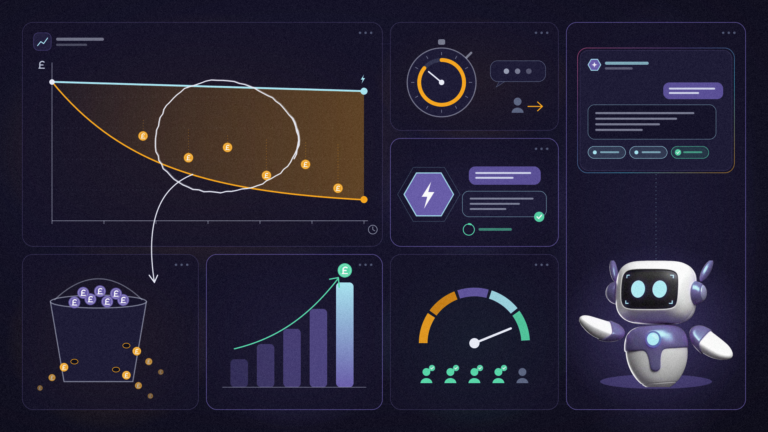
These impacts on the business are already tangible. According to a 2025 report citing MIT’s Project NANDA, 95% of organisations investing in generative AI are not seeing any measurable return and Gartner estimates that more than 40% of agentic AI projects will be cancelled by the end of 2027, “escalating costs, unclear business value or inadequate risk controls.” An enterprise RAG platform that handles only the happy path is a quiet contributor to both statistics.
Under the Query Layer: Four Data-Side Failure Modes
Even a well-orchestrated query pipeline fails if retrieval itself stands on weak foundations. Four issues surface repeatedly in stalled deployments:
Bad chunking
Documents split at arbitrary token boundaries separate clauses from their conditions and tables from their headers, so the retriever returns fragments that the model cannot reason over.
Metadata gaps
Without document type, date, owner, version, and permission metadata, the system cannot rank a current policy above a superseded draft, a classic source of confident, wrong answers.
Missing context
Knowledge scattered across SharePoint, CRMs, ticketing tools, and file shares means the retriever never sees the document that actually holds the answer.
Poor Retrieval ranking
Pure vector similarity retrieves what sounds alike, not what is authoritative. Production-grade enterprise search AI needs hybrid ranking that weighs recency, source authority, and permissions alongside semantic relevance.
How to Fix It: Verification, Then Architecture
Coveo’s engineering advice is refreshingly direct: it’s not about more agents — it’s about verification. Most composite and multi-hop queries can be handled by a single agent with a multi-search loop: decompose the question, search, read, check for gaps, and search again. If accuracy is important, the team should split the planning from the execution work; the planner defines acceptance criteria, and the executor gathers the evidence needed to satisfy them. The system should not respond until all the necessary facts have been verified.
However, orchestration is only effective if the knowledge layer that underpins it is connected, up-to-date, and managed. That is what most teams overlook — and the factor that ultimately determines whether the fix holds.
How Vaultiscan Builds Production-Grade RAG
Vaultiscan, a product of RSK Business Solutions, is built for this precise challenge: connecting enterprise knowledge with production-grade retrieval. Rather than bolting a chatbot onto fragmented data, it addresses both layers of the failure:
Vaulti Lake turns structured and unstructured content into a governed, retrieval-ready data lake for AI, with the chunking, metadata, and permissions that ranking depends on.
Vaulti GPT powers a private AI knowledge assistant that decomposes complex, multi-turn questions and answers only from verified, permissioned sources.
Vaulti SDK lets engineering teams embed that same governed retrieval layer into their own applications: production-grade RAG without rebuilding the plumbing.
All of it runs without enterprise data ever leaving the organisation’s control.
Frequently Asked Questions
Why do enterprise RAG systems fail on complex queries?
Most pipelines have only one retrieval step and respond immediately — before gathering all the evidence a complex query requires. For composite, dependent, and multi-hop questions, decomposition, context retention, and verification are required capabilities that naive RAG is not designed to perform.
Is fine-tuning the answer to RAG failures?
Rarely. In the RAG vs fine-tuning debate, fine-tuning changes how a model generates text, not what it retrieves. Failures rooted in chunking, metadata, and ranking persist regardless of the model.
What makes a RAG system production-grade?
A production-grade RAG system requires query decomposition, explicit verification loops, hybrid retrieval ranking, permission-aware answers, and a governed data foundation — evaluated against complex query patterns, not just simple lookups.
The Bottom Line
Enterprise RAG system failure is rarely a model problem. The data from Coveo, Menlo Ventures, MIT, and Gartner point to the same cause: systems break on query structure — composite, dependent, and multi-hop questions — and on the data foundations beneath them: chunking, metadata, and retrieval ranking. A larger model isn’t the solution. What’s needed is a pipeline that verifies before it responds, operating on a knowledge base that is connected, current, and governed.
Enterprises that make those two investments turn the assistant their teams quietly abandoned into the one they depend on daily.
Book a technical demo to see how Vaultiscan delivers production-grade RAG.