Ford just handed every enterprise AI leader an uncomfortable mirror.
In June 2026, Ford’s VP of vehicle hardware engineering, Charles Poon, admitted in a press briefing what many companies quietly already know: “Mistakenly, we thought that by just introducing artificial intelligence and adjusting the design requirements that we had, that that would produce a high-quality product.” It did not.
Ford had to hire back and promote more than 350 seasoned engineers — the so-called ‘grey beards’ — to rebuild the knowledge foundation those AI systems were missing. The turnaround worked: Ford has returned to the top of J.D. Power’s initial quality rankings among mainstream brands.
The lesson is blunt. AI does not fail because the models are bad. It fails because the knowledge those models run on is incomplete. The decades of undocumented engineering judgment that left when experienced engineers retired or were made redundant never made it into the datasets. The AI was sophisticated but hollow. And Ford is far from alone.
According to McKinsey’s State of AI 2025 survey, nearly one-third of all organisations using AI have already experienced consequences from AI inaccuracy. This blog examines why the knowledge gap is the defining failure mode of enterprise AI deployments in 2026, and what it takes to build the AI knowledge management that actually holds.
What Is an AI Knowledge Foundation?
An AI knowledge foundation is the structured, organisation-specific context underlying a language model that guides each response it provides. It’s not the model itself (GPT-4, Claude, and Gemini can all be capable models) but the proprietary documents, process records, historical decisions, compliance data, and expertise that make a general-purpose AI into a model that knows organisation’s business.
If this layer isn’t present, AI can be like a new worker on day one — already knowing how to do the job, but not the specific constraints, edge cases, and hard-learned lessons that make the job what it is. For Ford, these lessons were stored in the minds of experienced engineers. When those engineers left, the knowledge left with them.
The Grey Beard Problem Is Everywhere
Ford’s story is vivid because it played out in a high-stakes manufacturing context with public quality consequences. But the same dynamic is eroding AI performance across every sector.
In financial services, compliance decisions require not just regulatory text but years of case-specific interpretation. In healthcare, clinical AI needs institutional protocol context that rarely exists in structured form. In the legal sector, contract review tools are only as reliable as the precedents and firm-specific standards they have been given access to. In each case, organisations are deploying models trained on publicly available knowledge into environments where the critical knowledge is private, undocumented, and disappearing.
McKinsey’s 2025 research found that only 39% of organisations report measurable EBIT impact from AI at the enterprise level, despite 88% claiming to use AI regularly. The gap between adoption and value is not a model quality problem. It is a knowledge infrastructure problem.
What Happens When AI Lacks Institutional Knowledge
Confident wrong answers
A model trained without relevant organisational context will synthesise plausible-sounding responses from general data. In Ford’s case, this meant automated design systems that lacked the experiential patterns needed to catch pre-production flaws.
Siloed AI that cannot connect the dots
If there’s no sharing of knowledge across an enterprise, AI agents working in each silo contribute to that fragmentation rather than solve it. The model is only as connected as the data it can access.
Reactive rather than preventive outcomes
Ford’s challenge can be described as a ‘find-and-fix mentality’ — i.e., problems were caught late and corrected under pressure. Genuine AI knowledge management shifts that posture to prevention. But prevention requires context: knowing what has failed before, why, and under what conditions.
What a Proper Knowledge Foundation Looks Like
A private AI environment
Institutional knowledge is sensitive. It cannot be processed through public model APIs without data governance risk. Proprietary documents, client records, and operational data are safeguarded by private AI infrastructure, keeping them within the organisation’s control and forming the foundation of the knowledge layer.
Retrieval-Augmented Generation (RAG)
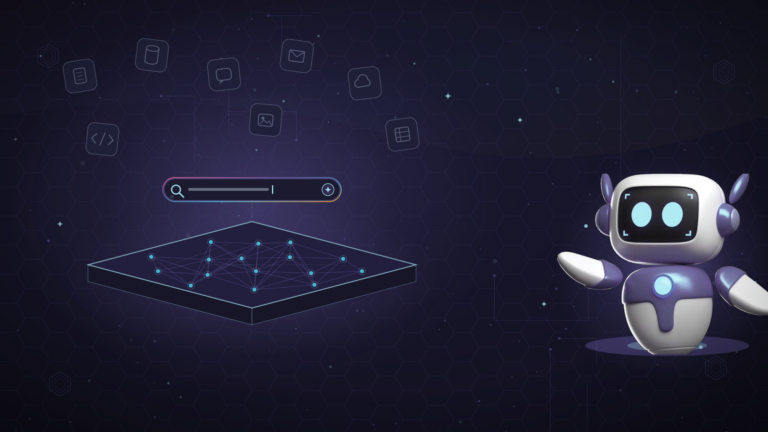
RAG allows an AI model to query a live knowledge base at inference time, instead of just what it learned during training. It is the difference between a model that knows general facts and one that can accurately answer “what was the resolution on the last contract dispute with Supplier X” in real time, from organisation’s own documents. For enterprise AI, RAG is the architectural prerequisite for accuracy.
A structured knowledge base AI layer
Raw documents are not a knowledge base. A genuine knowledge base AI system ingests, indexes, and structures organisational content in a form that AI agents can retrieve and reason over — and that stays current. This is the knowledge that Ford’s re-hired engineers are now curating and feeding back into the system.
The Challenges of Getting This Right
Knowledge capture is harder than it looks
Much of the most valuable institutional knowledge is tacit — it exists in conversations, in informal decisions, in the experience of knowing what not to do. Surfacing and structuring that knowledge requires deliberate process design alongside technology.
Data quality determines output quality
Incomplete, outdated, or poorly structured source documents produce inaccurate AI outputs regardless of model capability. Continuous data governance is a must.
Fragmentation across systems
The majority of businesses have their knowledge spread across a number of siloed tools, such as SharePoint, emails, CRMs, ERPs, and ticketing systems. If there is no integration, knowledge bases capture only part of an organisation’s knowledge.
The Path Forward
The Ford story will not be the last of its kind. The risk of a suboptimal knowledge base will continue to grow as agentic AI platforms continue to evolve (systems that can think, act, and make multiple decisions independently). An agent that works without a full institutional context does not only provide a bad answer — it takes consequential action based on one.
McKinsey’s 2025 research reveals that the most successful AI companies have one common trait: they manage their knowledge infrastructure, similar to how they view their data infrastructure, as a critical asset that must be owned, maintained, and governed. They don’t just place documents in a folder and call it to be their knowledge base. They build systems to keep knowledge up to date, organised, and easily retrievable by any AI agent requiring it.
How Vaultiscan Closes the Knowledge Gap
Vaulti GPT
Vaulti GPT is Vaultiscan’s private AI assistant. It gives your teams a secure, organisation-specific AI interface that reasons over your own documents, policies, and institutional knowledge. No data leaves your environment.
Vaulti Lake
Vaulti Lake is the structured knowledge layer beneath it. It continuously ingests, indexes, and versions content from across your enterprise — SharePoint, CRMs, ERPs, and internal wikis — so that what your AI retrieves is always current, source-backed, and contextually accurate.
Vaulti SDK
Vaulti SDK lets development teams embed this same private, knowledge-grounded AI directly into their own workflows and applications without rebuilding the infrastructure from scratch.
Together, these three components give enterprise AI more than fluency. They give it your institutional knowledge — structured, private, and always current.
Conclusion
Ford spent years discovering what should now be an industry axiom: AI without a knowledge foundation is not intelligent; it is automated guessing. The grey beard engineers were not valuable because they were human. They were valuable because they held knowledge the system could not access. The solution was not to shut down AI, but to provide the foundation it had been lacking.
It is no longer a question of whether enterprises should adopt AI, as 88% already do, but how they are building and scaling AI today. Whether your AI is knowledgeable enough about your organisation to be trusted is the question. Building that foundation — through private infrastructure, RAG architecture, and structured knowledge management — is what separates AI deployments that deliver from those that quietly erode quality and confidence.
Vaultiscan by RSK Business Solutions helps enterprise teams build exactly that foundation — private, secure, and connected to the knowledge that makes AI reliable.
Get a demo to see how Vaultiscan builds this foundation for your organisation.